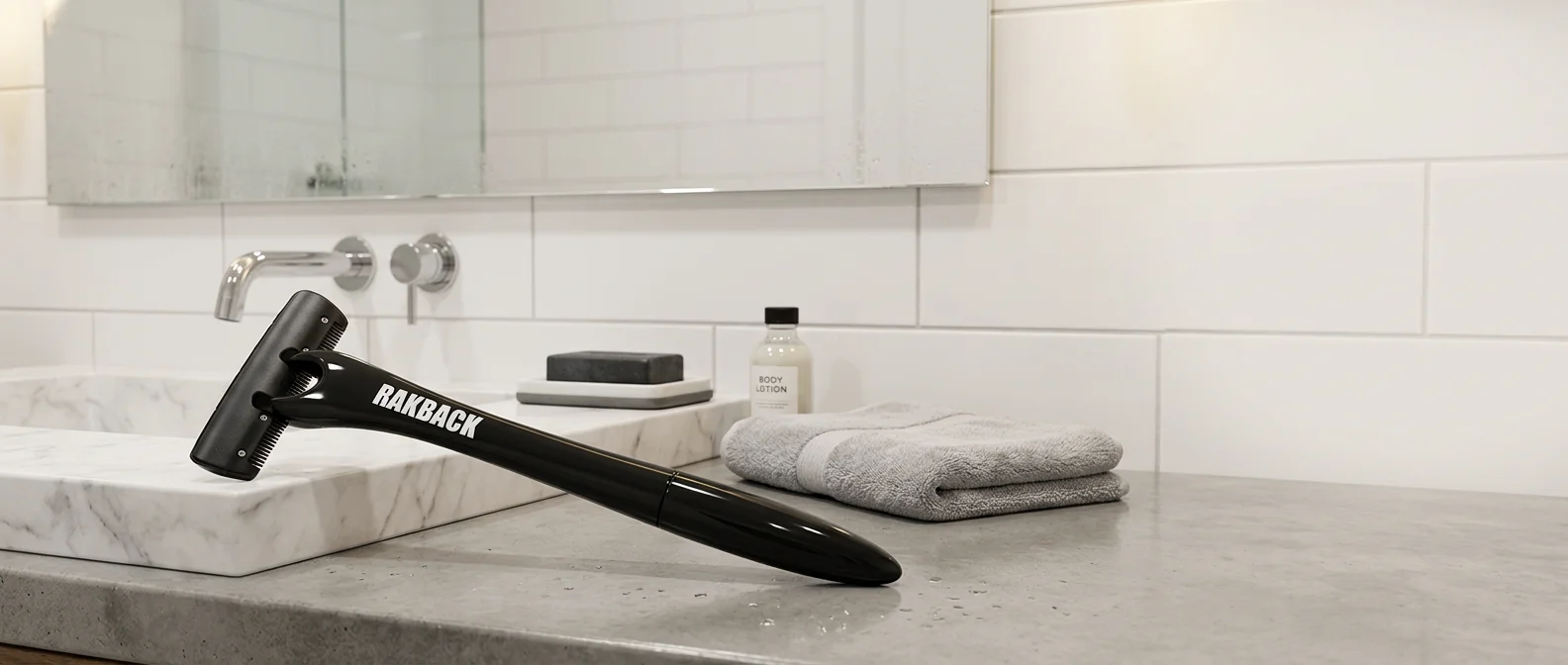
Shaving your back by yourself can be difficult, but it should not feel risky or frustrating. The back is one of the hardest areas to groom because it is wide, curved, and difficult to see clearly. A regular razor is usually too short for the job, which makes it easy to miss spots, press too hard, or cut the skin.
If you want to learn how to shave your back safely, the most important rule is to use the right tool and the right technique. Back shaving is not the same as shaving your face, chest, or arms. It requires more reach, better control, and a slower approach.
The good news is that you do not need help from someone else to get a clean result. With a long-handled back shaver, proper skin preparation, and careful strokes, you can shave your own back without cuts, razor burn, or heavy irritation.
Why Shaving Your Back Is Different
Your back is harder to shave because you cannot see every area while you work. The shoulder blades, spine area, lower back, and upper shoulders all create difficult angles. This makes control more important than speed.
A short razor forces your arm into awkward positions. That can lead to uneven pressure, which is one of the main causes of cuts and irritation. When the blade is not sitting properly against the skin, it may scrape instead of glide.
This is why learning how to shave your back by yourself starts with choosing a tool made for back grooming. A long-handled back shaver gives you better reach and helps you guide the blade more safely across hard-to-reach areas.
Use the Right Back Shaver
The right back shaver should have a long handle, stable grip, and shaving head that moves smoothly across curved areas. If the handle is too short, you will struggle to reach the middle of your back. If the handle feels weak, you may lose control over pressure.
A manual back shaver is usually best if you want the smoothest result. It uses blades to cut hair close to the skin. This can leave your back cleaner, but it also requires more care.
An electric back shaver is better for quick maintenance. It trims hair shorter without cutting as close to the skin. This may be a better choice if your skin gets irritated easily or if you do not need a fully smooth finish.
Trim Long Back Hair First
If your back hair is long or thick, do not start with a manual razor. Long hair can clog the blade quickly. It can also cause pulling, dragging, and uneven shaving.
Use an electric trimmer first to reduce the length. This makes the final shave smoother and easier. It also lowers the chance of irritation because the blade does not need to work through heavy hair.
This step is especially important if you have not shaved your back in a while. Trimming first saves time and helps prevent the most common shaving mistakes.
Take a Warm Shower Before Shaving
A warm shower helps soften back hair and prepare the skin. Soft hair is easier to cut, which means less pulling and less pressure. Clean skin also lowers the chance of clogged pores and post-shave irritation.
Stay in the shower long enough for the warm water to loosen the hair. You do not need to scrub aggressively. A gentle wash is enough.
After showering, keep the skin slightly damp if you are using a manual shaver. This helps shaving cream or gel spread more evenly across the back.
Apply Shaving Cream or Gel
If you are using a manual back shaver, shaving cream or gel is important. It creates a protective layer between the blade and the skin. This reduces friction and helps the blade glide instead of scrape.
Do not dry shave with a manual blade unless the tool is specifically designed for that use. Dry shaving can increase redness, cuts, and razor burn.
Use enough product to cover the areas you plan to shave. If you cannot reach every part of your back with your hand, use an applicator, long-handled sponge, or your back shaver if it is designed for wet shaving.
How to Shave Back Hair by Yourself
Start with slow, controlled strokes. Do not rush. The goal is to remove hair evenly without pressing hard.
Move the shaver across one section at a time. Begin with the upper back, then move to the shoulders, center back, and lower back. Using a consistent pattern helps you avoid missed areas.
Back hair can grow in different directions. If your skin is sensitive, shave with the direction of hair growth first. This is usually gentler than shaving against the grain.
Use Light Pressure
Heavy pressure is one of the biggest reasons men cut or irritate their back while shaving. Pressing harder does not create a better shave. It usually creates more friction.
Let the blade or trimmer do the work. A sharp blade should remove hair without force. If you feel pulling, dragging, or scraping, stop and rinse the blade.
If the blade still feels rough after rinsing, it may be dull. Replace it before continuing. A dull blade is more likely to irritate the skin than a sharp one.
Use a Mirror to Check Your Progress
A mirror can help you see missed spots, especially around the shoulder blades and center of the back. Use a bathroom mirror with a handheld mirror if possible.
Do not rely only on feeling. Back hair can be patchy, and it is easy to miss narrow strips. Checking your progress helps you correct small areas before finishing.
If you see a missed patch, touch it up gently. Do not keep shaving the same area over and over. Repeated passes can make the skin red and irritated.
Avoid Shaving the Same Area Too Many Times
Multiple passes over the same spot can cause razor burn. This is especially true on the upper back and shoulders, where the skin may react quickly.
Use overlapping strokes, but keep them controlled. Slight overlap helps prevent missed strips. Excessive overlap creates unnecessary friction.
If you need a closer shave, make a second light pass only after rinsing the area. Never scrape the same dry or irritated skin repeatedly.
Rinse the Blade Often
Hair and shaving cream can clog the blade while you shave. A clogged razor does not cut cleanly. It can drag across the skin and create uneven results.
Rinse the blade after every few strokes. If your back hair is thick, rinse even more often. Keeping the blade clean helps maintain a smoother shave.
Electric shavers also need cleaning during use if the cutting head fills with hair. A clean tool performs better and feels more comfortable.
What to Do After Shaving
After shaving, rinse your back with cool water. Cool water helps remove leftover shaving cream and can calm the skin. Do not scrub the area with a rough towel.
Pat the skin dry instead of rubbing. Rubbing can irritate freshly shaved skin, especially if you used a manual blade.
Apply a lightweight moisturizer after drying. This helps reduce dryness and supports the skin barrier. Choose a gentle product without harsh fragrance if your skin is sensitive.
Avoid Irritation After Shaving
After shaving your back, avoid anything that can aggravate the skin. Tight shirts, heavy sweating, and direct sun exposure can make irritation worse.
If possible, shave at night or when you have time to let the skin calm down. This gives your back a chance to recover before workouts, beach trips, or outdoor activity.
Avoid alcohol-based aftershaves. They can sting and dry out the skin. A gentle moisturizer is usually a better choice for the back.
How Often Should You Shave Your Back?
How often you shave depends on how fast your hair grows and how smooth you want your back to look. Some men shave every week. Others only shave before vacations, summer events, or special occasions.
If you want a consistently smooth back, shaving every one to two weeks may work well. If you only want to reduce visible hair, trimming with an electric shaver may be enough.
Do not shave too often if your skin becomes irritated. Give the skin time to recover. A clean result is not worth constant redness or discomfort.
Common Mistakes to Avoid
One common mistake is using a regular short razor. It does not give enough reach and often forces bad angles. A long-handled back shaver is safer and more effective.
Another mistake is shaving long hair without trimming first. This can clog the blade and cause pulling. Trim first if the hair is thick or overgrown.
Many men also use too much pressure. This increases the risk of cuts and razor burn. Use light pressure and controlled strokes instead.
How to Shave Your Back by Yourself With Less Effort
The easiest method is to create a repeatable routine. Start with trimming if needed. Take a warm shower. Apply shaving cream if using a manual blade. Shave in sections. Rinse often. Check with a mirror. Moisturize afterward.
This routine keeps the process simple and reduces mistakes. It also helps you get more consistent results each time.
Once you understand how to shave your back by yourself, the process becomes much easier. The key is not speed. The key is preparation, control, and using the right tool.
Final Advice
Learning how to shave your back without cuts or irritation comes down to using the right back shaver, preparing the skin, and shaving with light pressure. Do not rush the process or force a regular razor to do a job it was not designed for.
If your back hair is thick, trim it first. If your skin is sensitive, use shaving cream and avoid repeated passes. If you want a smooth finish, use a sharp manual back shaver. If you want fast maintenance, use an electric shaver.
The safest way to shave back hair by yourself is to keep the routine controlled and simple. Prepare the skin, use the right tool, move slowly, clean the blade often, and protect the skin afterward. With the right approach, you can keep your back smooth, clean, and comfortable without needing help.